Specifying a vanity cabinet for a wet area
The vanity is the only millwork item installed next to a running tap. Most failures are substrate and sealing, not the finish.
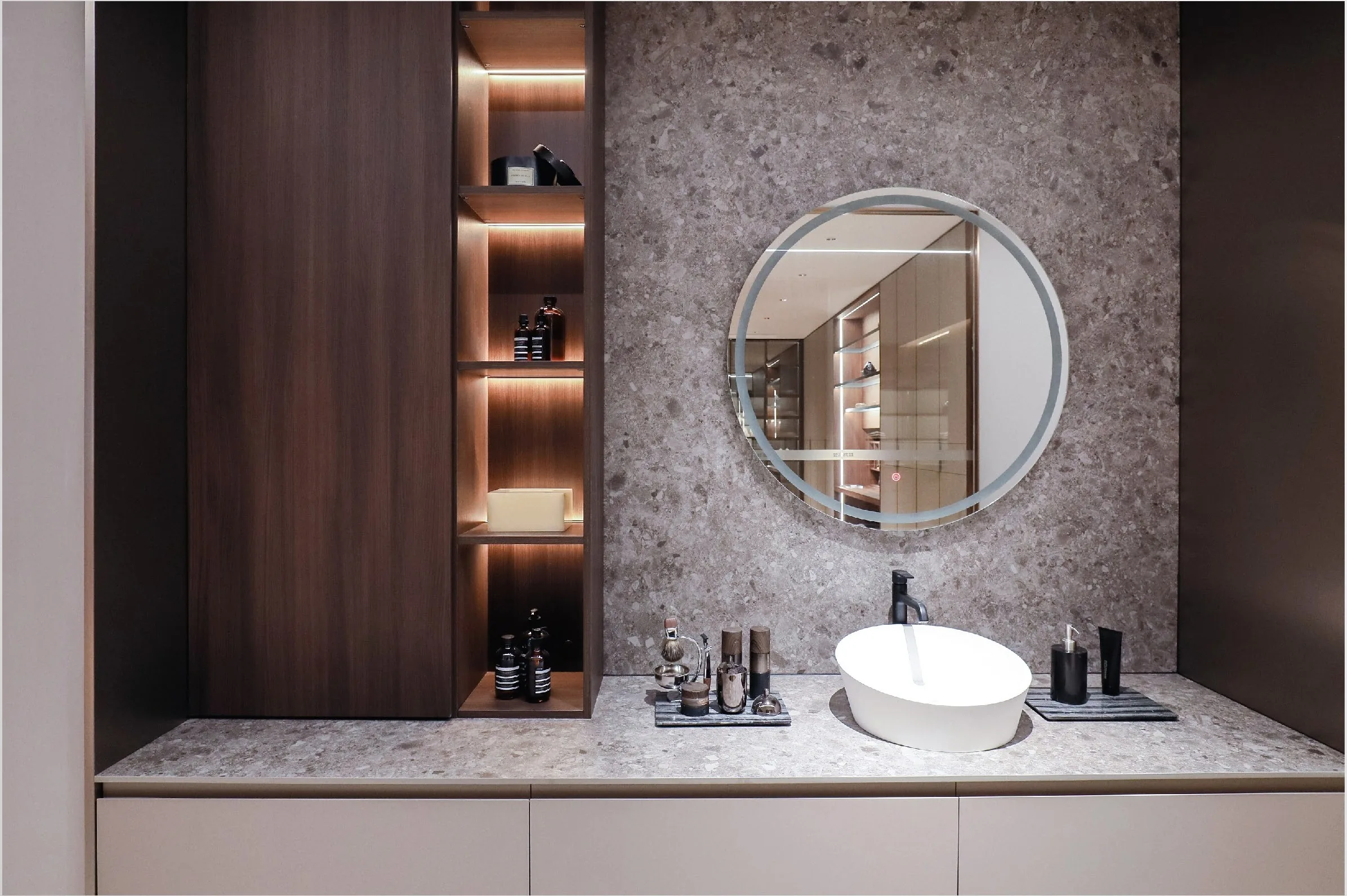
Specifying a vanity cabinet for a wet area
The vanity is the only millwork item installed next to a running tap. Most failures are substrate and sealing, not the finish.
Use a moisture-resistant core, seal all cut edges and specify the substrate in the drawing. On export jobs we also detail the back panel clearance so the unit is not flat against a damp wall.
The wall-hung unit needs blocking cast into the wall at the right height. If the blocking is not drawn, the fitter makes a decision on site, and the decision is usually to drill the waterproofing.
Basin cut-outs are CNC'd from the basin template, not from a dimension on a sketch. Get the template, or get the wrong hole.
What Should a Buyer Check Before Approving the Shop Drawing?
Approval of the shop drawing is the point where the buyer still has leverage, so treat it as a review task rather than a formality. Check that the drawing states the moisture-resistant core by name, because a drawing that names only a finish leaves the substrate open to substitution. Check that every cut edge is called out for sealing, including edges that will be hidden after installation, since those are the ones most often skipped. Check that the back panel clearance is dimensioned rather than described, so the gap from the damp wall is a build instruction and not an intention.
Then check the wall-hung items against the blocking. The blocking must appear on the drawing at the correct height, and the fixing points on the cabinet must line up with it. If the blocking is absent from the drawing, the fitter will decide on site, and that decision is usually to drill the waterproofing. Finally, confirm the basin cut-out is referenced to the basin template rather than to a dimension on a sketch. A drawing that passes these checks gives the factory and the fitter the same instructions.
How Do You Compare Two Quotes for the Same Vanity?
Two quotes for the same vanity are rarely quoting the same scope, so compare them line by line rather than on the total. Start with the substrate: a quote that specifies the moisture-resistant core is not comparable with one that names only the finish, because the difference sits behind the surface where the buyer cannot see it. Next, look for edge sealing as a stated operation. If it is missing from one quote, the saving is in the step that protects the cut edges.
Compare how each quote handles the back panel clearance. A quote that details the clearance is pricing a unit that stands off the damp wall; one that does not may be pricing a unit flat against it. Compare the wall-hung fixing: a quote that includes blocking coordination is doing work the other is leaving to the site. Finally, compare the basin cut-out basis. A quote that works from the basin template is pricing a CNC cut-out from the template; one that works from a sketch dimension is pricing a risk. The lower total is only lower if the scope matches.
What Are the Common Mistakes When Specifying a Wet-Area Vanity?
The most common mistake is specifying the finish and leaving the substrate unstated. The finish is what the buyer sees, so it gets the attention, but the moisture-resistant core is what the wet area depends on, and an unnamed substrate can be substituted without anyone noticing until the unit fails. The second mistake is treating edge sealing as implied. Cut edges are where moisture enters, and if sealing is not written as an operation, it is the first step dropped when a job is rushed.
The third mistake is describing the back panel clearance in words instead of detailing it, which leaves the gap to interpretation. The fourth is leaving the wall-hung blocking off the drawing. When the blocking is not drawn, the fitter makes a decision on site, and the decision is usually to drill the waterproofing. The fifth is accepting a basin cut-out taken from a dimension on a sketch. The cut-out is CNC'd from the basin template, so without the template the hole is wrong. Each of these mistakes is cheap to prevent at the drawing stage and expensive to correct after installation.
Start with
a brief.
Send the drawings and the room list. We will come back with a scope, a finish schedule and a price range.
Buyer questions
What substrate should I specify for a bathroom vanity cabinet in a wet area?
Specify a moisture-resistant core and state the substrate in the drawing. Seal all cut edges. On export jobs, also detail the back panel clearance so the unit is not flat against a damp wall. Most failures in wet-area vanities come from substrate and sealing, not the finish.
How should the basin cut-out be made for a vanity cabinet?
Basin cut-outs are CNC'd from the basin template, not from a dimension on a sketch. Get the template from the basin supplier, or the cut-out will be the wrong size. Provide the template before production so the CNC cut-out matches the basin.
What wall preparation does a wall-hung vanity need?
The wall-hung unit needs blocking cast into the wall at the right height. The blocking must be drawn in the drawings. If it is not drawn, the fitter decides on site, and that decision is usually to drill the waterproofing.