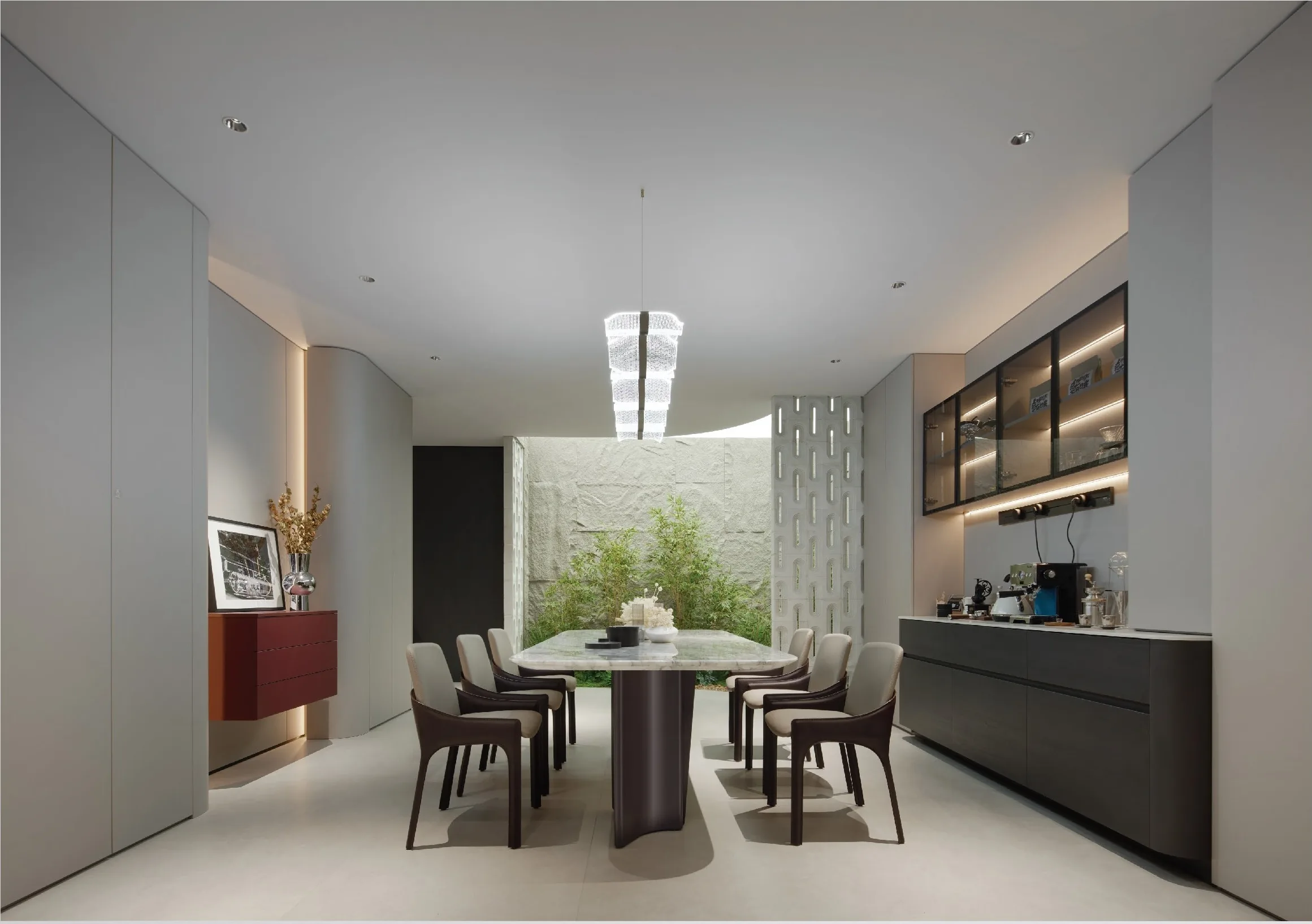
Dining & Sideboard
Long-run sideboards, glass display and service counters, planned around the table's serving route.
This product line covers the joinery that serves a dining room: sideboards and buffet runs, display and glass-door cabinets, dining-height storage benches, and the open shelving that sits above them. It suits developers fitting show flats and tower units, hospitality projects, and contractors who need the dining zone to match the kitchen and wardrobe package on the same drawing set. Every unit is made to a drawing, not picked from a catalogue.
Specifications
Dimensions are set by your drawing and confirmed on the shop drawing we return after deposit. The table below shows what the specification covers and the unit each item is stated in — the values themselves are fixed per project, so the drawing is the authority.
| Item | What is specified | Stated in |
|---|---|---|
| Overall size | Width, height, depth of each carcass, plus plinth or leg height | mm |
| Carcass board | E0 or E1 plywood, particleboard with melamine, or solid wood | board type + thickness in mm |
| Door and drawer front | Lacquer (matte or gloss), PET, acrylic, veneer, or PVC membrane | finish name + sheen |
| Top surface | Quartz, sintered stone, solid surface, granite, or matching cabinetry panel | material + thickness in mm |
| Hardware | Hinges, runners, handles — Blum, Hettich or DTC, or client-specified brand | brand + model reference |
| Internal fit-out | Shelf count and spacing, drawer boxes, cutlery inserts, cable or glassware cut-outs | count + position on drawing |
| Packing | Flat-pack or assembled | method per carton |
Ask for the board type, door finish and hardware brand to be written on the quotation line by line. Those three lines are what you are actually comparing between suppliers, and they are the three that are easiest to leave vague.
What drives the price
There is no per-metre rate for a sideboard. The number is built bottom-up from five blocks, and the same drawing can land in very different places depending on how each block is answered.
- Carcass board. Plywood and particleboard are different materials at different cost; the grade within each family also moves the number.
- Door finish. Lacquer, PET, acrylic, veneer and PVC membrane run on different lines with different curing and handling steps, so labour and reject rates differ.
- Top surface. A quartz or sintered stone top is a separate process from the cabinetry and may need its own production slot; a cabinetry-panel top does not.
- Hardware brand. Hinges and runners from a named European brand versus a domestic brand is a visible line on the quote.
- Freight, duty and installation. Flat-pack versus assembled changes the cubic volume you pay to ship, and on-site supervision is a separate service.
Two drawings that look identical on a render can differ mainly in blocks two and four. Settle those before you compare totals.
Lead time and MOQ
Production runs 25–35 days after drawing approval and deposit. That clock starts at approval, not at enquiry — revisions after approval restart it, which is the single most common cause of a late dining package. Add booking, sailing, clearance and haulage on top; door-to-door is usually 5–8 weeks once those are counted.
MOQ starts at 1 set for sampling, and project pricing applies from 20 sets upward. A single sideboard ordered as a sample is a legitimate first order: it settles the finish and the joint detail before the tower quantity is committed. Sampling is not part of the 25–35 day production count, so finish it before the project order is placed.
Get a quote on your drawing
Send the dining and sideboard drawings, the room dimensions, and your preferred board, door finish and hardware brand on WhatsApp. We return a shop drawing set and a line-by-line quotation built from those five blocks, so you can see what each choice costs before you commit. If the drawing is not ready, send a sketch and the room plan — we will tell you what we need to price it.
Dining & Sideboard
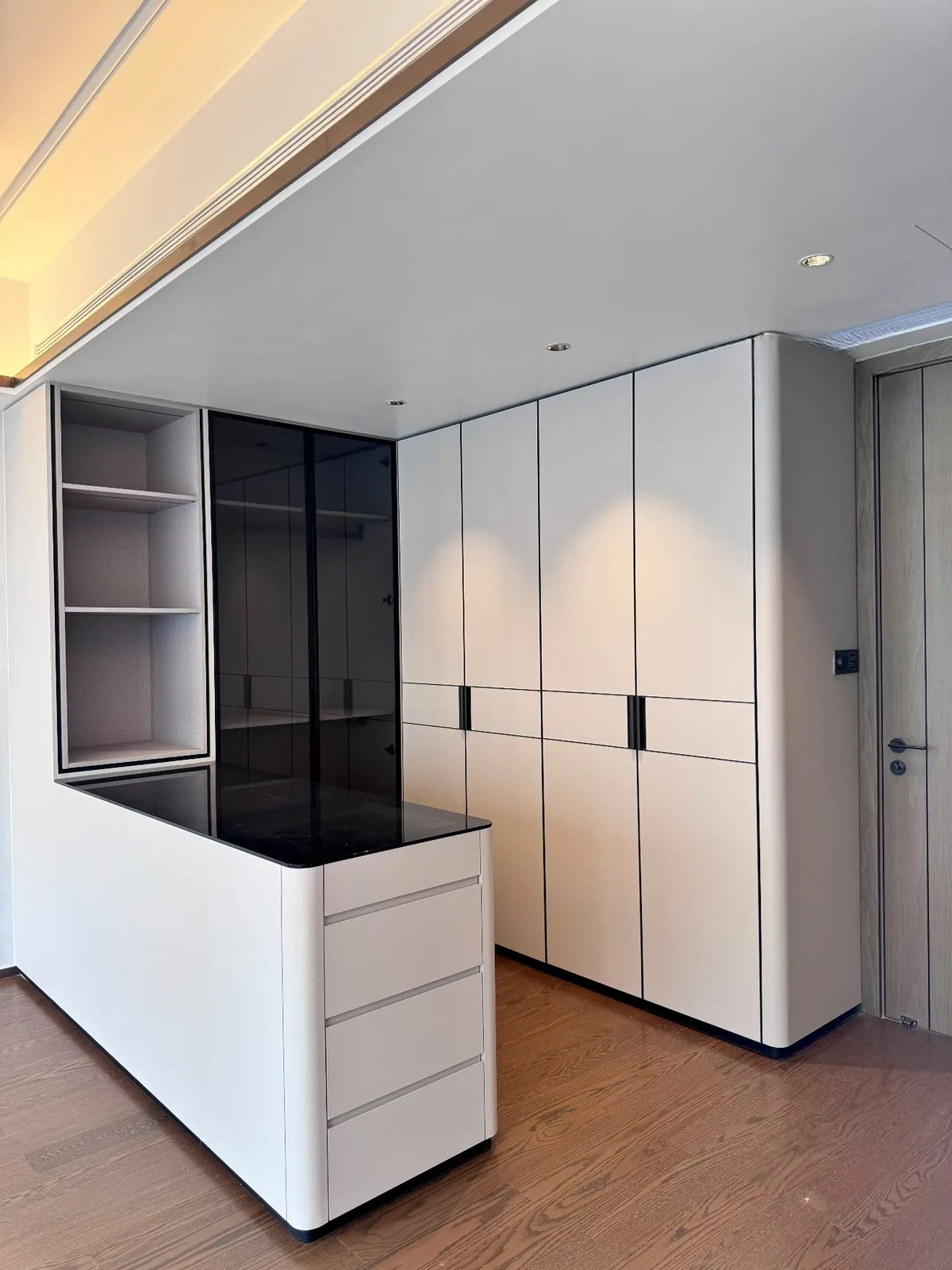
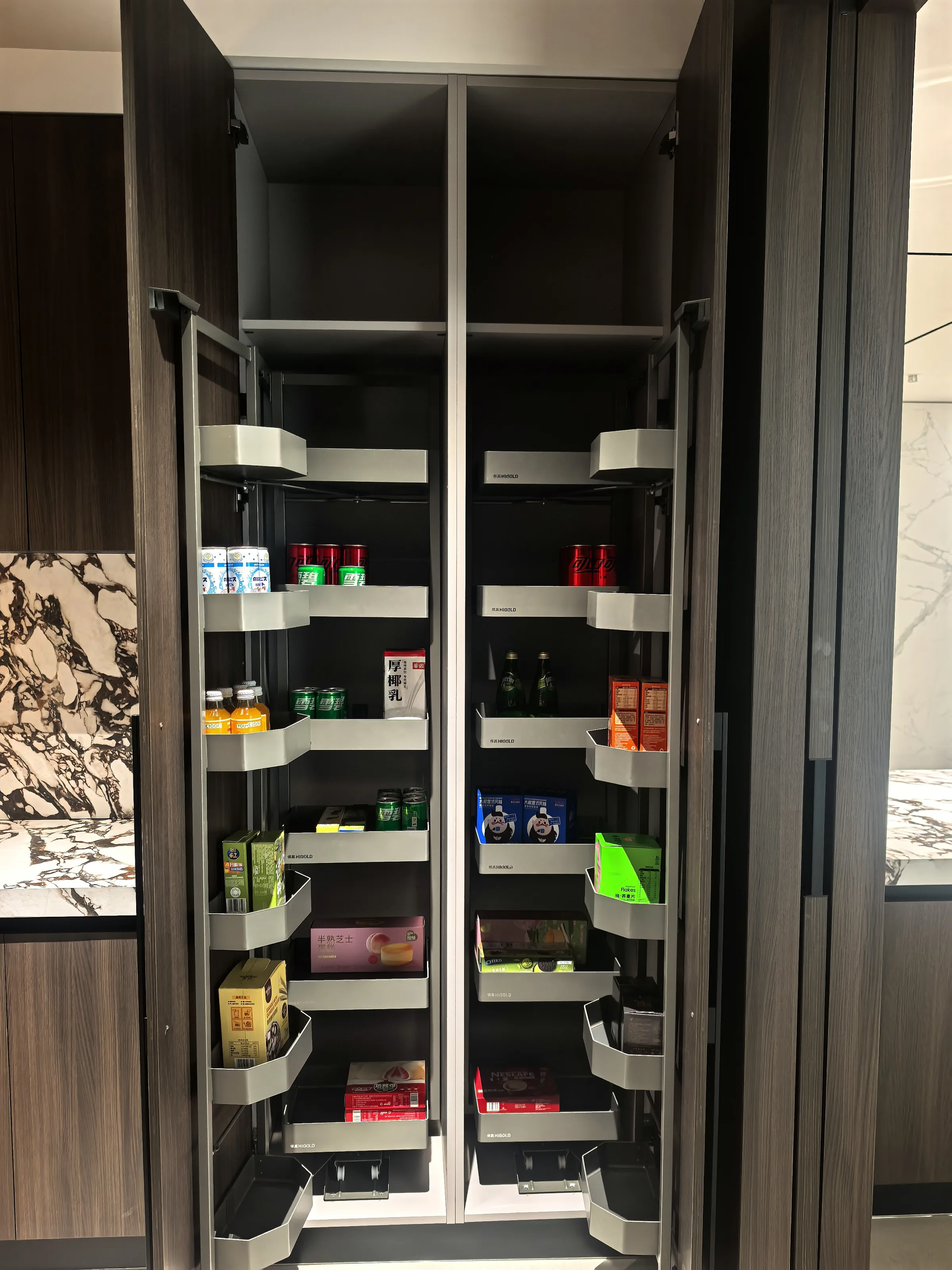
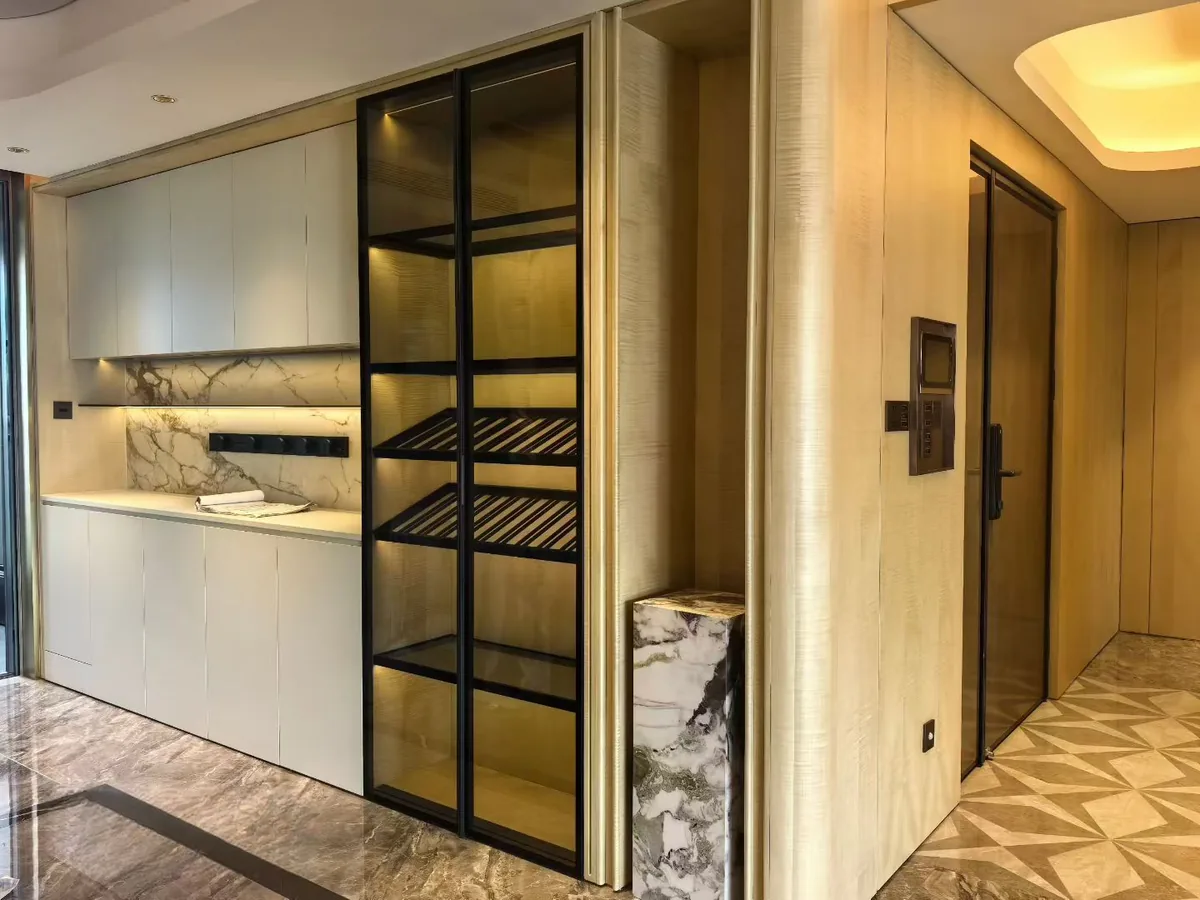
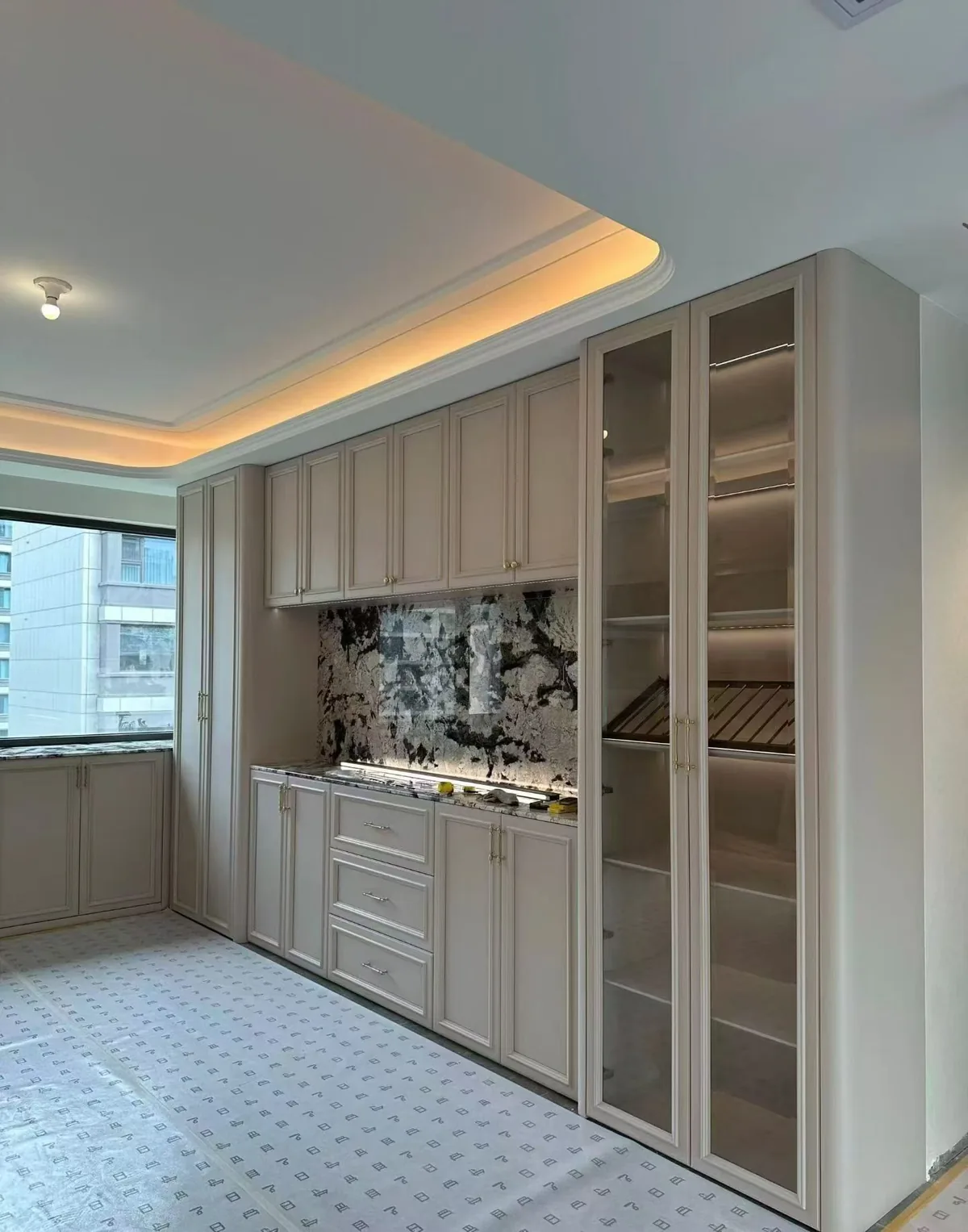
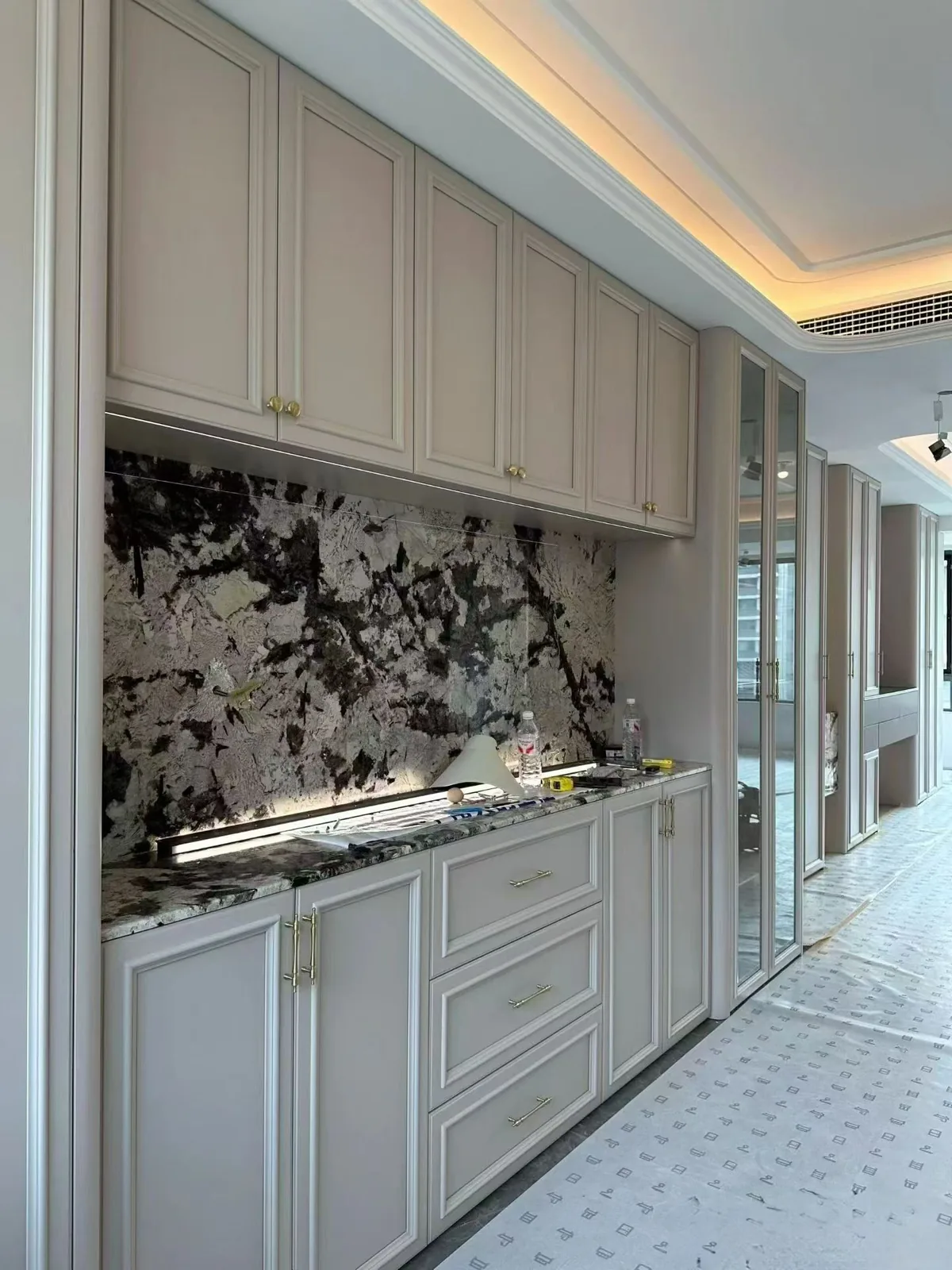
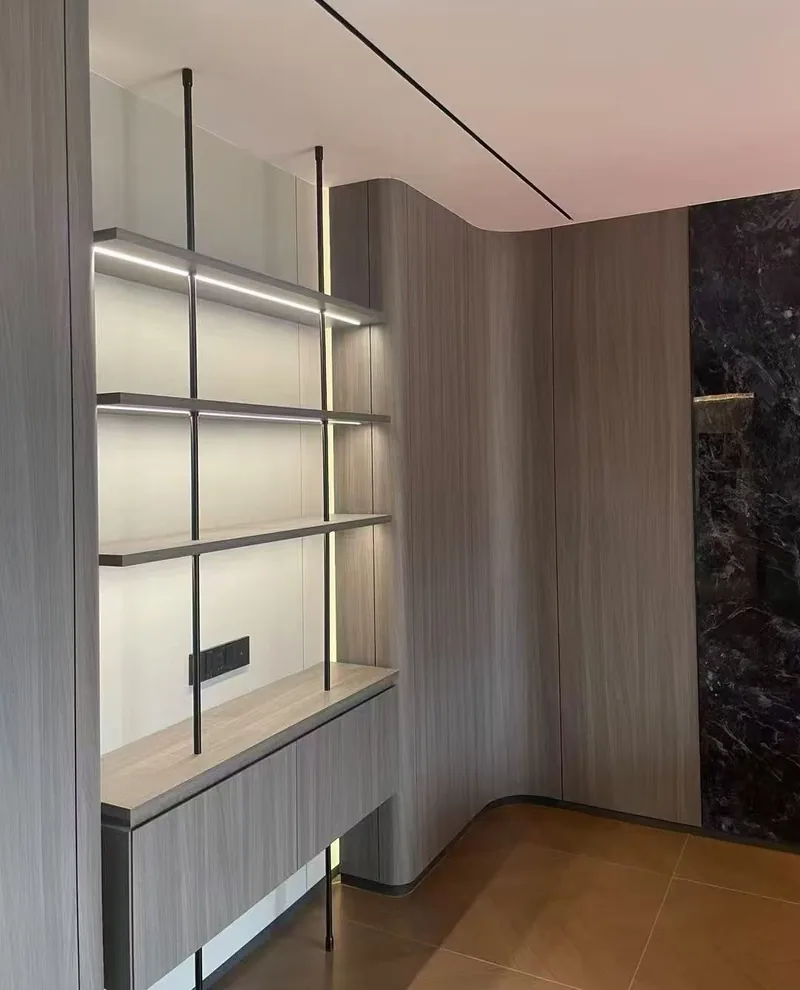
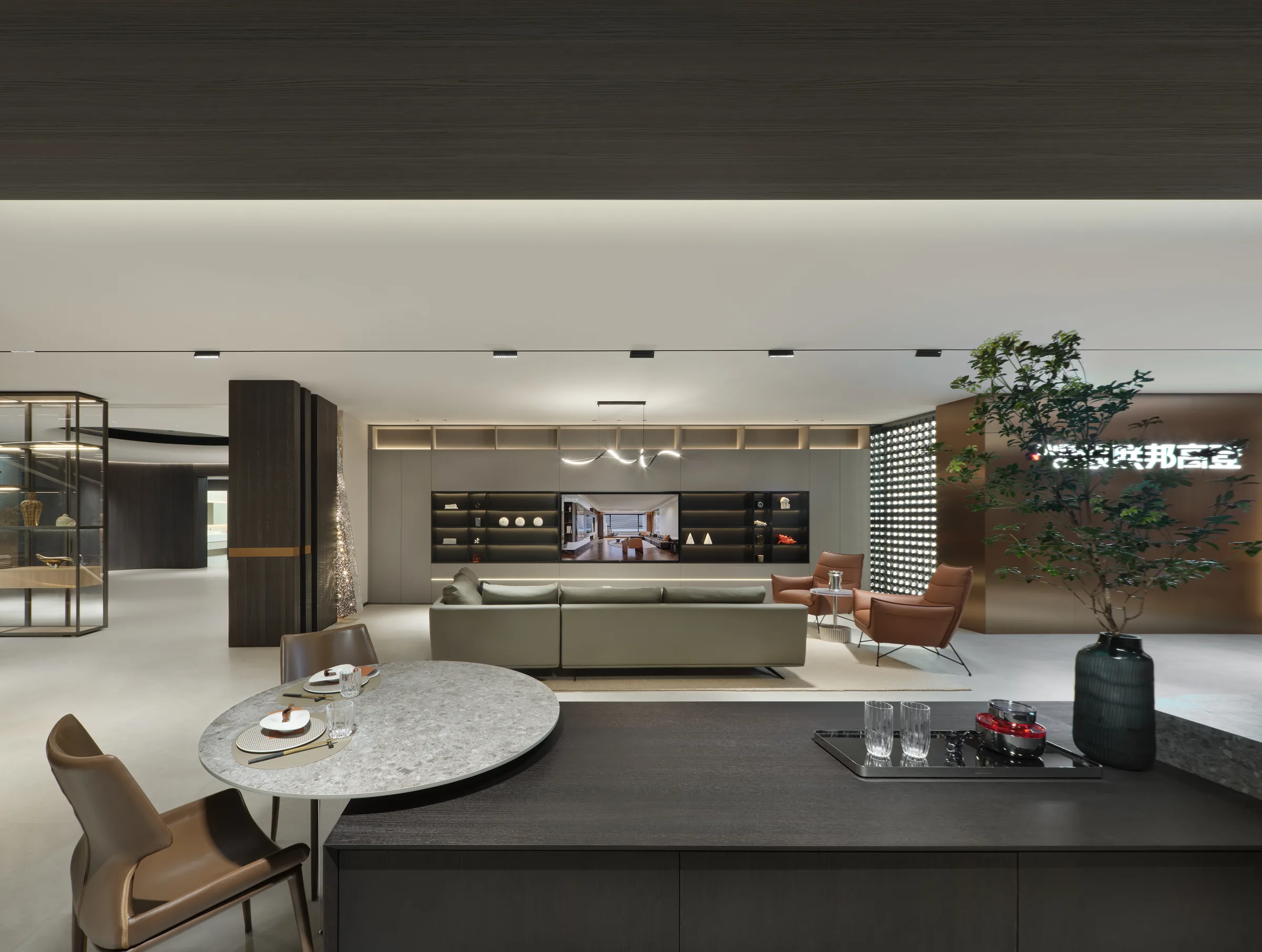
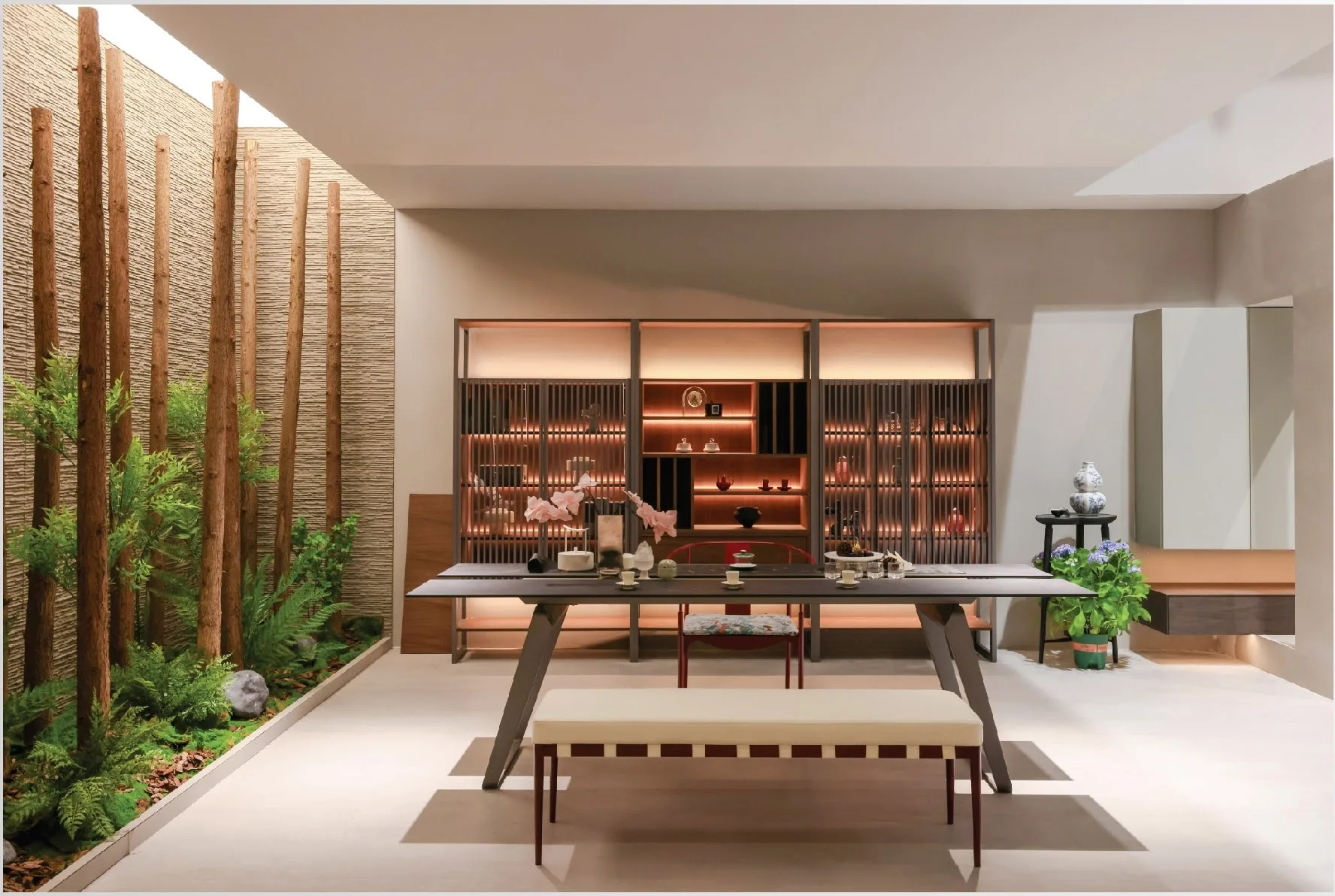
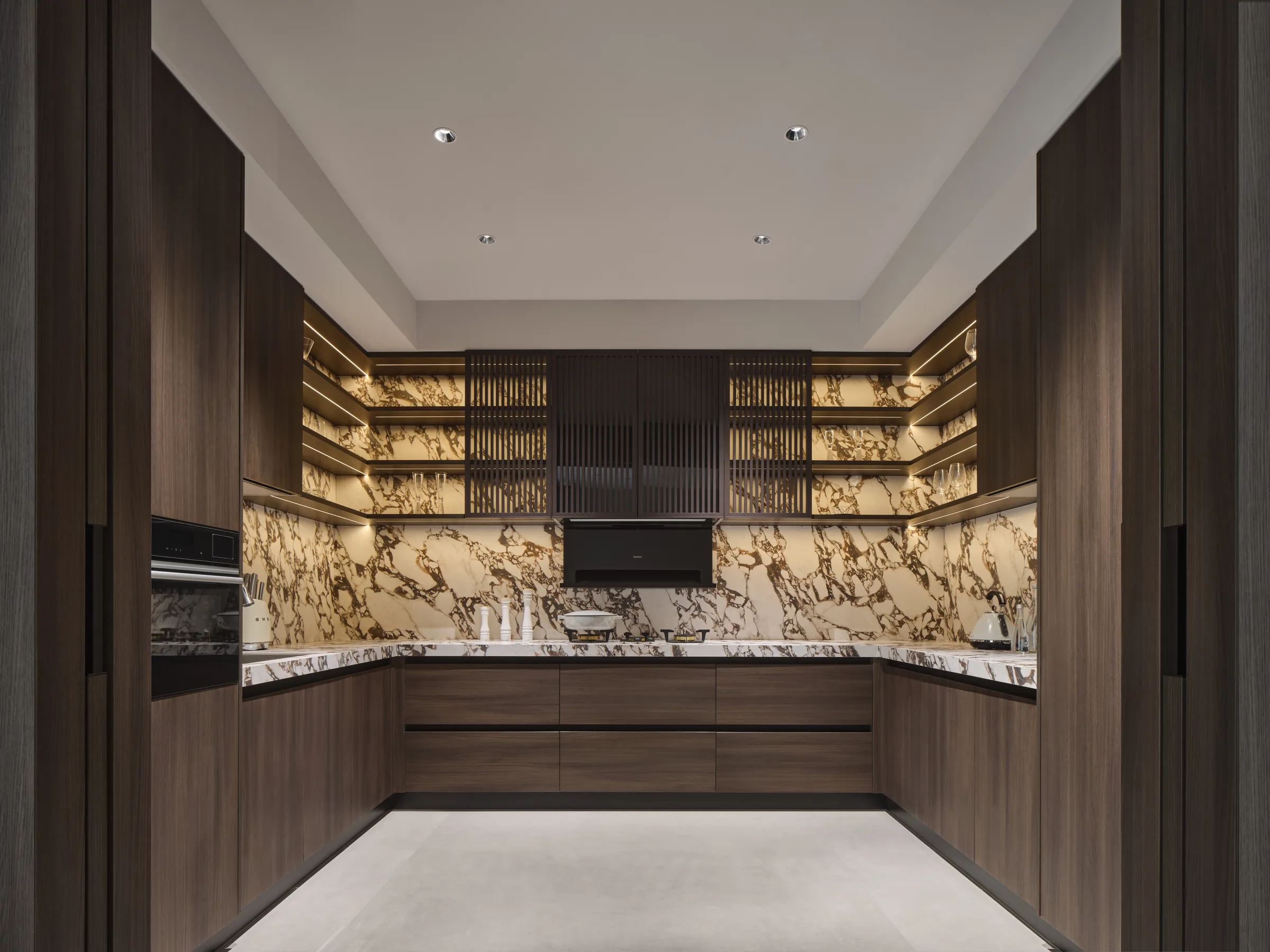
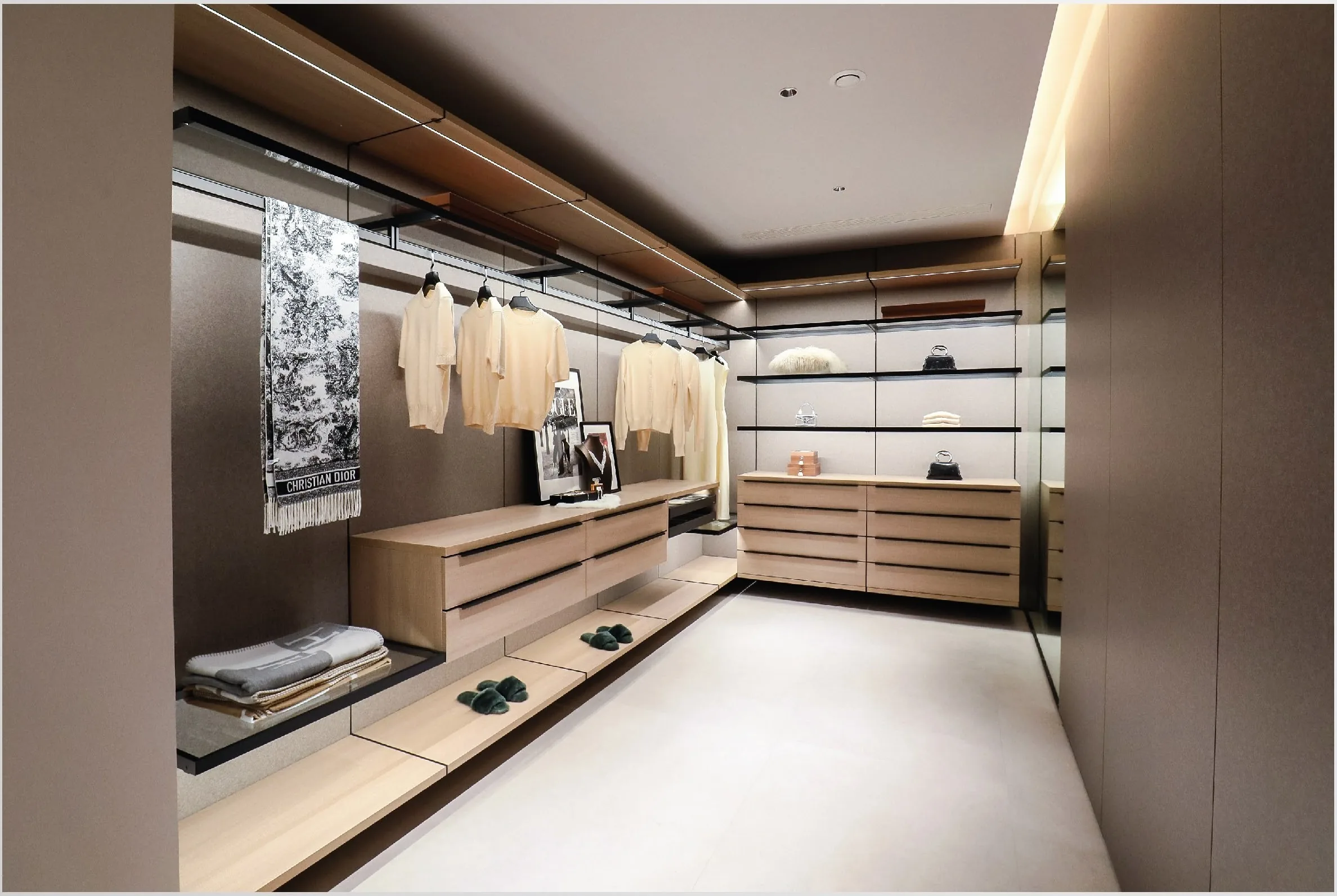
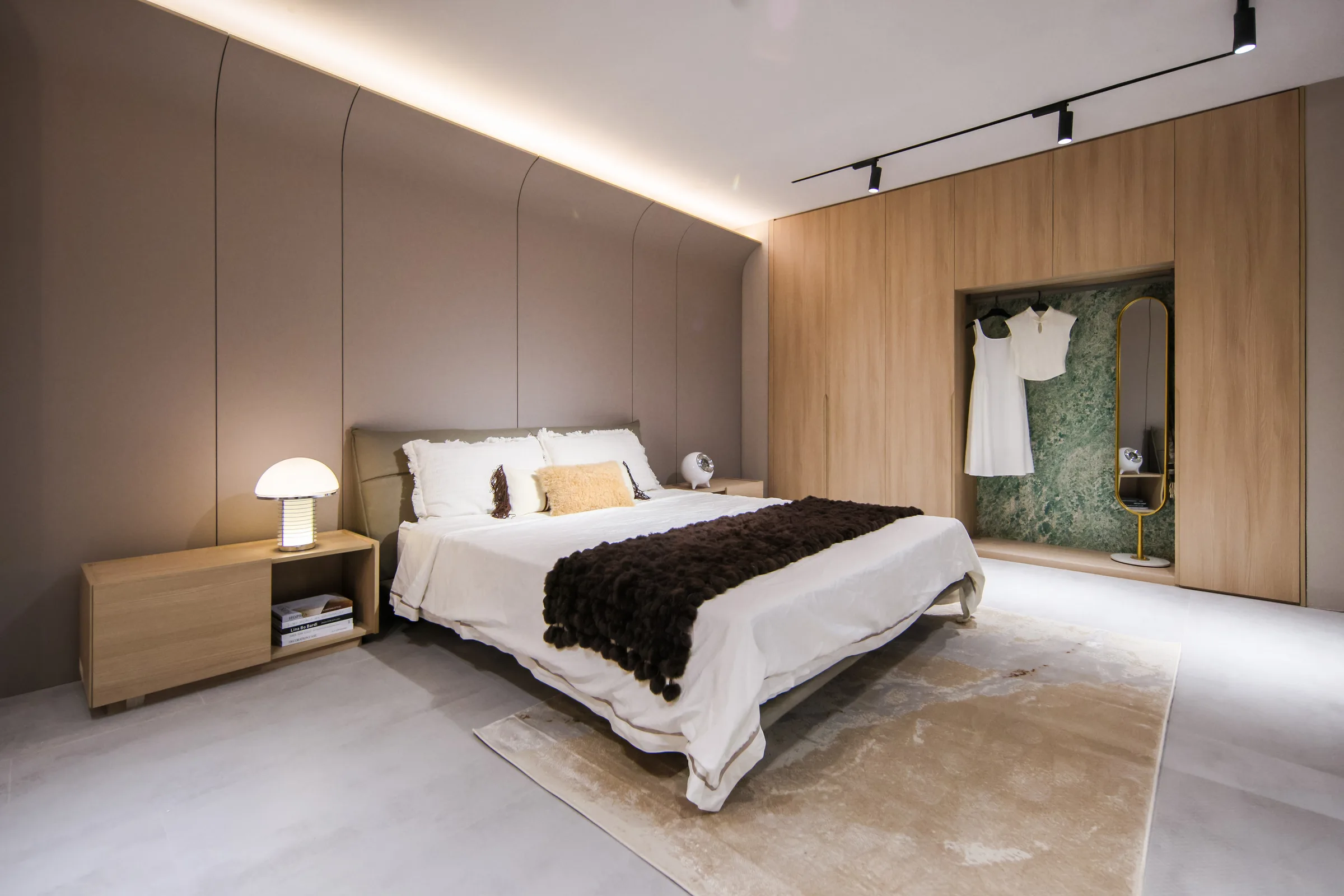
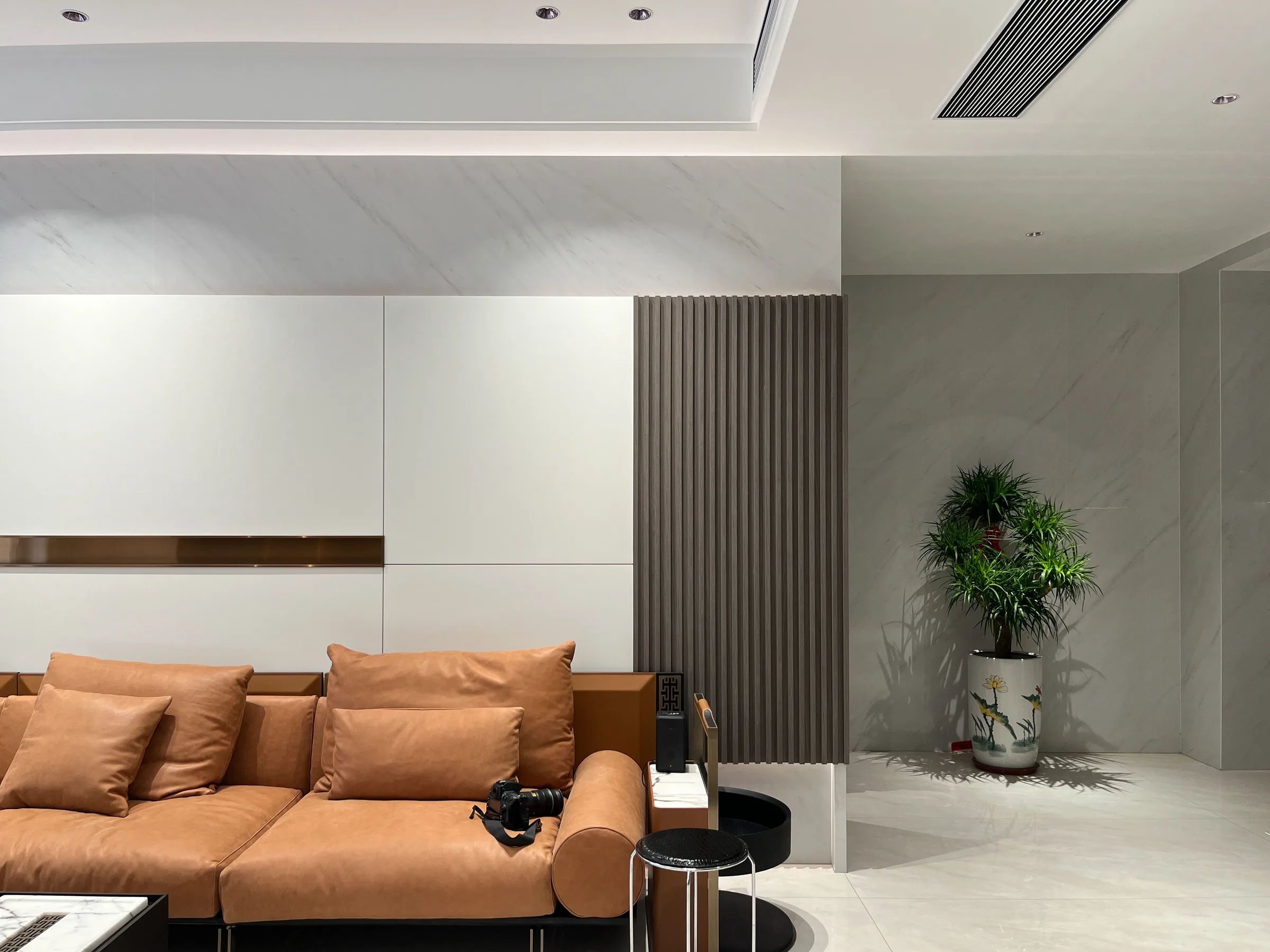
Real material photography from our production — click any frame to inspect the grain, edge and joint at full pixel scale.
Start with
a brief.
Send the drawings and the room list. We will come back with a scope, a finish schedule and a price range.
Buyer questions
How deep should a sideboard be?
Deep enough for the plates and serving ware it stores, shallow enough not to block the walkway. The usable depth is decided by the internal layout, not the external look.
Can the top be stone or sintered stone?
Yes. The carcass is built to carry the top and the top is cut to the unit. Stone and veneer can be matched in the same factory, which is where colour drift usually starts.
Is a display unit part of the same package?
Often. Dining storage, display and sideboard are usually drawn as one run so the proportions read together rather than as separate purchases.