'Bone line' door profile: a new door face for 2024
A thin structural line pressed into the door face, launched at the Guangzhou fair.
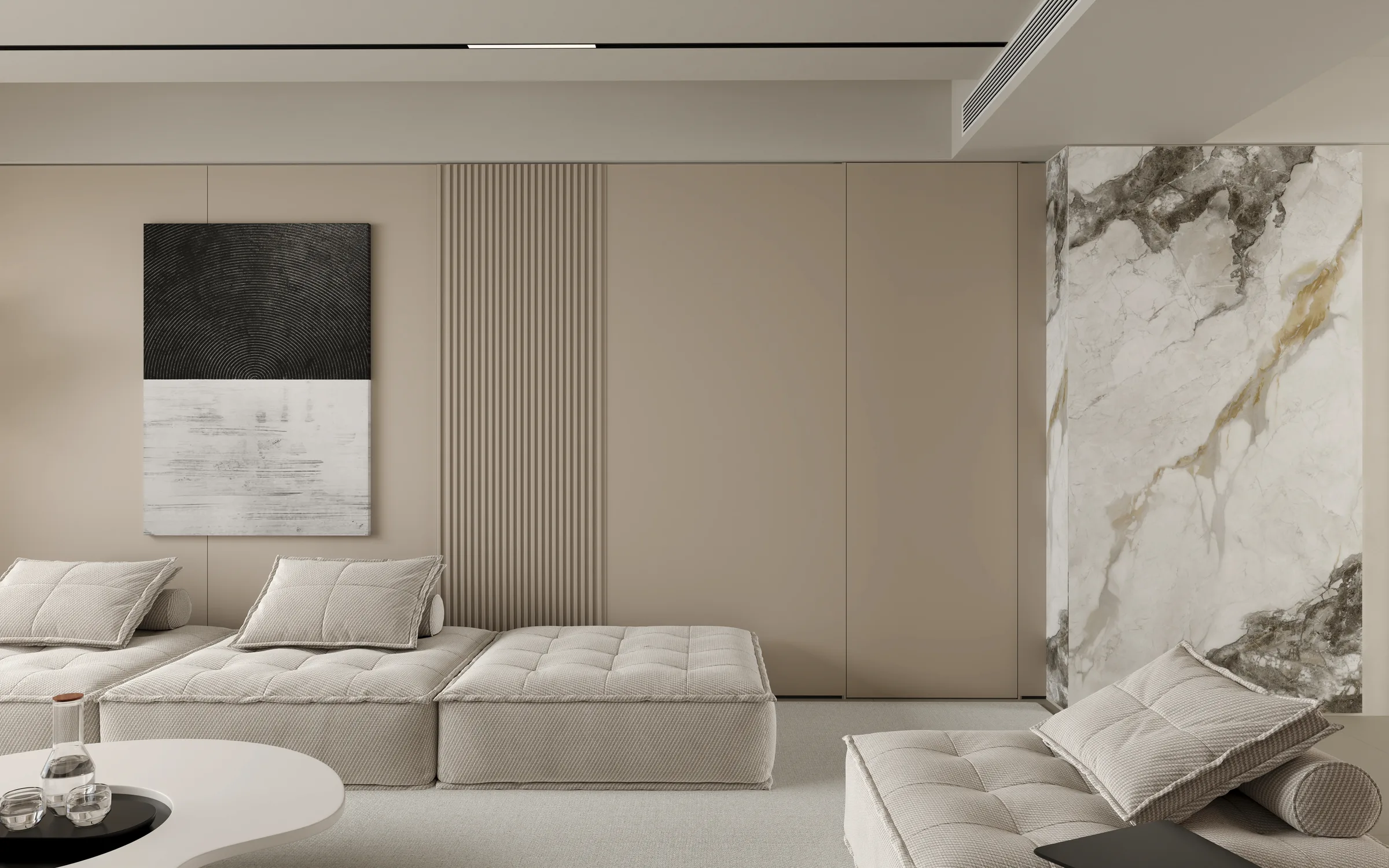
'Bone line' door profile: a new door face for 2024
A thin structural line pressed into the door face, launched at the Guangzhou fair.
At the 2024 Guangzhou custom-furniture fair the company released a door profile it calls 'bone line' — a narrow recessed line forming the structure of the door face, so the panel's frame reads without added mouldings or applied strips.
Technically this is a pressing and edge-band question, not a design question. A line that narrow only stays straight if the substrate is stable, the press is aligned on every batch, and the edge banding does not creep at the corners. It fails visibly and it fails late — usually after the doors are hung.
For overseas orders we sample a full door, not a corner: shipped flat on a 1:1 panel with the opposite corner shown. Before a container leaves, we photograph the four corners and the full face under raking light, because raking light is where a warp shows first.
How is a bone line door actually made, step by step?
The bone line is produced by pressing the recessed line into the door face and then edge-banding the panel, so the sequence of operations matters more than any single machine. The substrate is prepared first, because a line that narrow only stays straight if the board underneath is stable. The press is then aligned for the batch, and the edge banding is applied so it does not creep at the corners. Each of these steps is a point where the line can drift, and the drift is not always visible on the line itself.
For a buyer, the practical question is where in that sequence your order is checked. Ask the supplier to describe the order of operations and the point at which the face is inspected. Because the failure mode is late — usually after the doors are hung — inspection has to happen before packing, not after installation. The full-door sample and the corner photographs described in the existing process are the evidence that the sequence held on your batch, so treat them as production records rather than presentation images.
What should a buyer compare between bone line suppliers?
Compare suppliers on control of the pressing and edge-band steps, not on the appearance of a single sample. The first comparison point is substrate stability: ask what the supplier does to keep the board stable before pressing, since the line depends on it. The second is press alignment across batches — a supplier who aligns per batch will describe that routine, while one who aligns once will not. The third is edge-band behaviour at the corners, which is where creep shows first.
The fourth comparison is inspection evidence. A supplier who photographs the four corners and the full face under raking light before a container leaves is giving you a record you can compare across orders. Ask to see that evidence from a previous shipment, not only from your sample. Finally, compare the sample itself: a full door shipped flat on a 1:1 panel with the opposite corner shown tells you more than a corner cut, because it lets you judge the line along its whole length. Suppliers who cannot provide these items are asking you to accept the risk of a late failure.
What are the common mistakes buyers make with this profile?
The most common mistake is approving a corner sample. A corner shows the line at its easiest point and hides how it behaves across the face, which is why the full door on a 1:1 panel with the opposite corner shown is the sample to insist on. The second mistake is judging the face in ordinary light. Raking light is where a warp shows first, so an approval made under flat lighting can pass a door that will read badly once hung.
The third mistake is treating the bone line as a design choice and leaving the pressing and edge-band questions to the factory. Because the failure is late, the buyer who does not ask about substrate stability, press alignment and edge-band creep discovers the problem after installation, when correction is most expensive. The fourth mistake is skipping the pre-shipment photographs of the four corners and the full face under raking light, which are the only record you will have of the batch as it left. Ask for them every time, and compare them against the approved full-door sample rather than against your memory of it.
Start with
a brief.
Send the drawings and the room list. We will come back with a scope, a finish schedule and a price range.
Buyer questions
What is the 'bone line' door profile?
The 'bone line' door profile is a narrow recessed line pressed into the door face that forms the structure of the panel, so the frame reads without added mouldings or applied strips. It was released at the 2024 Guangzhou custom-furniture fair. The company describes it as a pressing and edge-band question: the line stays straight only if the substrate is stable, the press is aligned on every batch, and the edge banding does not creep at the corners.
How do you check bone line door quality before shipping?
For overseas orders the company samples a full door, not a corner, shipped flat on a 1:1 panel with the opposite corner shown. Before a container leaves, the four corners and the full face are photographed under raking light, because raking light is where a warp shows first. The company notes the profile fails visibly and late, usually after the doors are hung.
How do I start an order for bone line doors?
Send a brief with the drawings and the room list. The company replies with a scope, a finish schedule and a price range. The enquiry form asks for name, email, phone or WhatsApp, destination market, project type (residential, hospitality or commercial) and a scope in brief. Details stay with the project team and are not added to mailing lists.